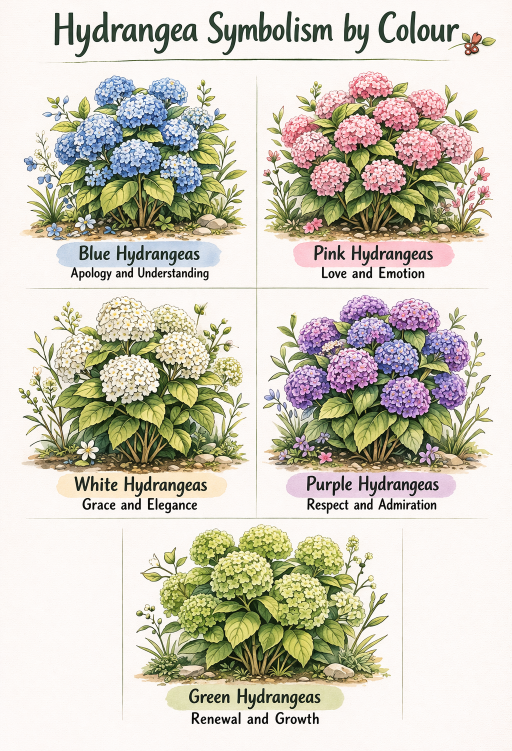
Hydrangeas (Hydrangea) are not only admired for their lush blooms and garden presence—they are also among the most symbolically rich flowers in the world. Their meaning shifts with color, culture, and context, making them uniquely expressive plants that can communicate everything from apology to deep love.
- A Flower of Changing Meaning
- One of the most fascinating aspects of hydrangeas is that their symbolism is not fixed. Just as their colour can change depending on soil conditions, their meaning changes depending on how and where they are used.
- In some cultures, hydrangeas are deeply emotional flowers—associated with gratitude and sincerity. In others, they once carried more critical meanings, tied to pride or superficial beauty. Today, they are most often seen as symbols of abundance, feeling, and generosity.
- Symbolism by Colour
-
Blue Hydrangeas - Apology and Understanding
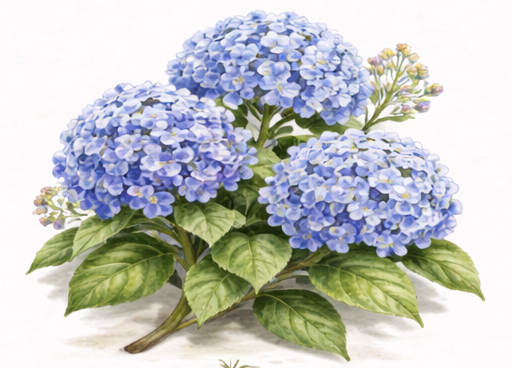 Blue hydrangeas are closely associated with regret, apology, and emotional depth. Their cool tones evoke calmness and sincerity.
A bouquet of blue hydrangeas is sometimes given as a gesture of apology, especially in East Asian traditions, where expressing emotion through flowers carries strong cultural meaning.
-
Pink Hydrangeas - Love and Emotion
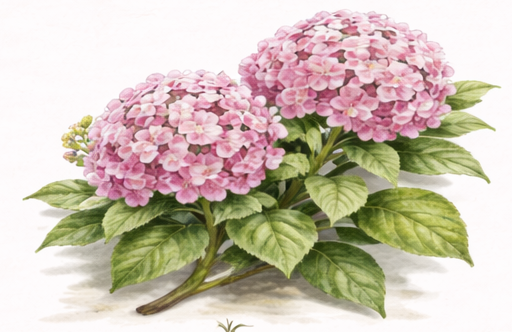 Pink hydrangeas represent affection, romance, and heartfelt emotion. Unlike red roses, which symbolize passion, pink hydrangeas suggest a softer, more enduring love.
They are often used in wedding arrangements to symbolize emotional connection and lasting relationships.
-
White Hydrangeas - Grace and Elegance
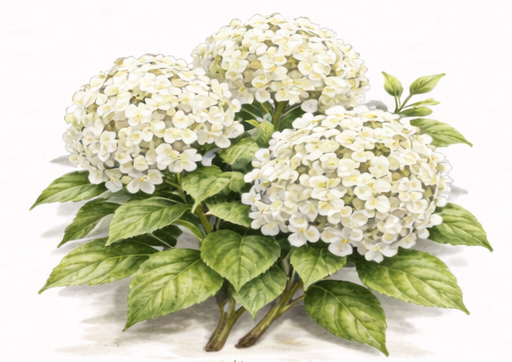 White hydrangeas symbolize purity, refinement, and grace. Their clean, classic look makes them a favorite for formal settings.
White hydrangeas are commonly used in bridal bouquets and ceremony décor, representing sincerity and new beginnings.
In Victorian times, they could also symbolize vanity, reflecting a different cultural perspective on their showy blooms.
-
Purple Hydrangeas - Respect and Admiration
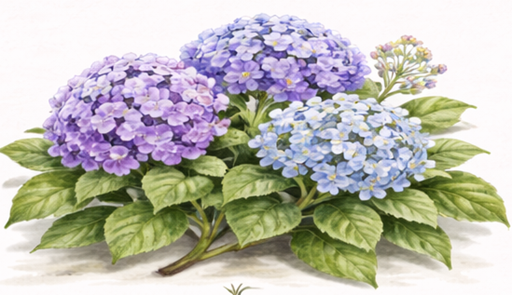 Purple hydrangeas are associated with dignity, admiration, and high regard.
They are often given to express respect, such as honoring a mentor, teacher, or someone admired.
-
Green Hydrangeas - Renewal and Growth
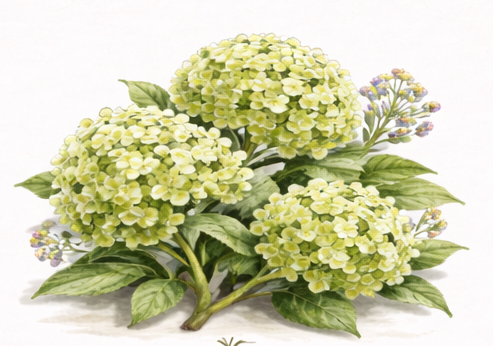 Green hydrangeas symbolize fresh starts, prosperity, and renewal.
They are used in celebrations like housewarmings or new beginnings, representing growth and positive change.
-
Blue Hydrangeas - Apology and Understanding
- Cultural Symbolism
-
Japan - Emotion, Gratitude, and Apology
In Japan, hydrangeas are deeply connected to emotion and sincerity.
A well-known story tells of a Japanese emperor who neglected a woman he loved due to his duties. To express regret and gratitude, he gifted her hydrangeas - giving the flower its lasting meaning of heartfelt apology and appreciation.
Hydrangeas also bloom during Japan’s rainy season, reinforcing their association with reflection, quiet beauty, and emotional depth.
-
Victorian Europe - Pride and Vanity
In Victorian England, hydrangeas had a more negative interpretation.
They were sometimes seen as symbols of vanity, boastfulness and emotional distance.
Giving hydrangeas could be interpreted as a subtle message criticizing someone’s pride or superficial charm.
This meaning likely arose from the plant’s large, showy flowers but relatively low seed production, suggesting outward beauty without substance. This led to the interpretation: “all show, little depth”.
-
Modern Meaning - Abundance and Heartfelt Expression
Today, hydrangeas have largely shed their negative associations and are widely seen as symbols of abundance, gratitude, emotional openness and harmony.
Hydrangeas are commonly used in weddings, garden designs, and gift bouquets, where they represent fullness of feeling and generosity.
-
Japan - Emotion, Gratitude, and Apology
- Unlike many flowers with a single fixed meaning, hydrangeas are emotionally flexible. Their symbolism depends on color, cultural background and context of giving. This makes them especially meaningful in personal gestures, where intention matters more than tradition.
- Hydrangeas are flowers that speak quietly but deeply. Whether offered as an apology, a declaration of love, or a gesture of respect, they carry layers of meaning shaped by history, culture, and color. Their beauty lies not only in their blooms, but in their ability to reflect the complexity of human emotion.